Mental health plays a crucial role in your daily life and overall physical health. It is a state of mental well-being that links to your emotions, thoughts, and social well-being. In this post, we not only define mental health but also highlight its importance. We will also share mental wellness self-care practices to help you live a healthy and happy life. Let’s begin!
What is Mental Health?
Mental health is the fitness of your brain, which directly relates to your cognitions, emotions and psychological behaviors. Consider it as the brain’s functioning instructions, like how to think, act, or respond accordingly to the situation.
Importance of Mental Health
Mental health has a body-and-soul relation with our physical health. It acts like a protein for the body, making you feel energized and boosting productivity. But, it doesn’t mean you only care about maintaining better mental health. It means that good mental wellness positively impacts the body, and vice versa. Your physical fitness needs as much attention as your mental wellness does, and vice versa. Let’s understand it with an example:
Example: Mental strength means a good mood, which leads to a great start to the day and better social well-being. Because the first 30 to 60 minutes after waking up set the tone for the rest of the day, a healthy mindset will make the day go well.
But, in opposition to this, a sick mind can cause stress, depression, and other mental health disorders, even when you just wake up. This may result in a headache. A few minutes later, you feel drained, saying, “Let’s have some more rest.” And probably you won’t eat anything, which can cause stomach problems and eating disorders. That’s how the full day you feel upset, tired, and daily-life tasks remain pending.
What Are the 4 Types of Mental Health?
Most people think mental health types are like depression, stress, anxiety, etc. These are the conditions of mental health, not types themselves. Some make you sad and hopeless, cause disturbed sleep, and, similarly, each impacts differently. Understand them like branches connected to 4 main domains of mental health, creating a structure, like:
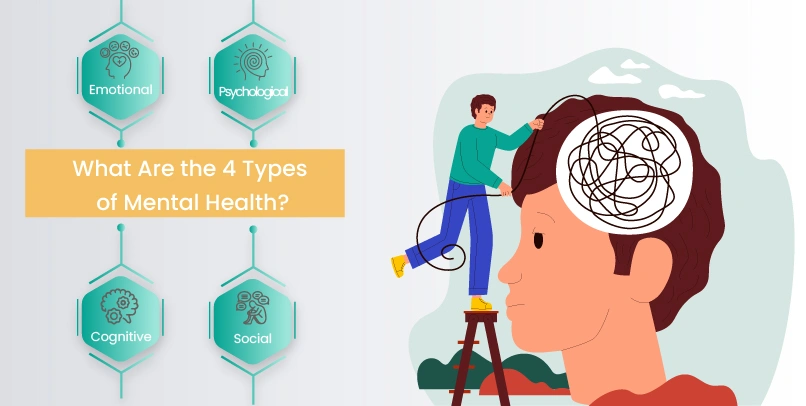
Depression > Mood Disorder > Emotional(One of the four mental health types)
However, the Centers for Disease Control and Prevention (CDC) categorizes mental health into four dimensions. These include:
- Emotional
- Psychological
- Cognitive
- Social
1. Emotional Mental Health
Emotions such as happiness, sadness and fear are natural. And as per the situation, we humans experience them. Emotional health is the capability to understand and manage feelings. Also, it means always being honest in accepting them.
Significance of Emotional Health
While emotions are innate, managing, expressing, or improving emotional health is a skill that builds over time and with past experience. It is not always about smiling on the face and staying calm. Positive and negative emotions affect everyone. But those with good emotional health manage these feelings and stabilize themselves without becoming overwhelmed or overreacting. Similarly, one with weak emotional health experiences persistent mood shifts, as well as finds it hard to face or tackle daily life challenges. That’s why maintaining great emotional health is necessary.
Signs Your Emotional Mental Health Needs Attention
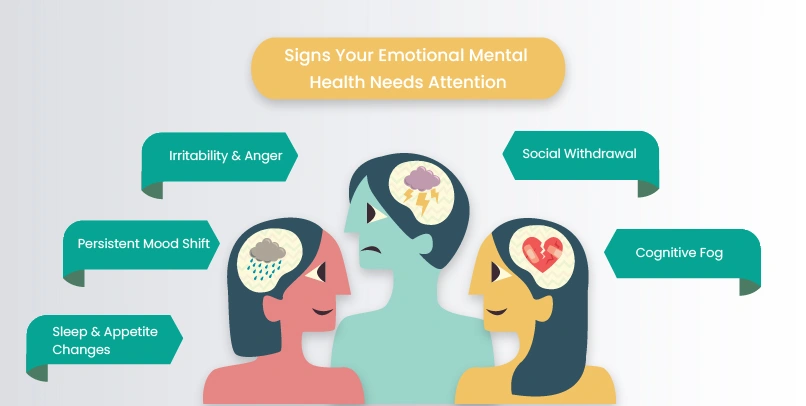
- Persistent Mood Shift
- Irritability & Anger
- Social Withdrawal
- Cognitive Fog
- Sleep & Appetite Changes
2. Psychological Mental Health
Psychological mental health refers to your thoughts about yourself. Means how better you can recognize or listen to your inner thoughts. And what perceptions you have about yourself. It can be criticism, like always blaming, raising objections and judging your personality. And often, compassion, which means understanding oneself in the face of personal failure.
Importance of Psychological Mental Health
In life, self-acceptance is key to success, and healthy psychological functioning is a key part of it. Instead of self-doubt, you rebuild yourself and feel good about yourself. Opposed to this, someone with a severe psychological health disorder always thinks, “there is something wrong with me”, even though it’s not their fault.
Signs of Psychological Mental Health Deterioration
- Chronic Self-Doubt
- Identity Confusion
- Unsolved Trauma Responses
3. Cognitive Mental Health
Our brain’s decision-making power, ability to concentrate, and approach to thinking, learning, and memorizing are controlled by cognitive mental health. It shows how good you are at processing information, identifying others’ behavior, and performing tasks.
One of the main causes of cognitive mental disorder is Schizophrenia. It is the root cause of disorganized thinking, and World Health Organization (WHO) research shows thataround 23 million people are affected by Schizophrenia.
Importance of Cognitive Mental Health
Strengthening cognitive mental health means effective decision-making, adaptive thinking and meticulous management of daily activities. While cognitive mental health disorders create several challenges in real life.
Cognitive Mental Health Disorders Symptoms
- Brain Fog
- Disorientation
- Reduced processing speed
- Persistent forgetfulness of recent activities
- Facing difficulty in concentrating
4. Social Mental Health
We, as human beings, meet and communicate with tons of people daily, and, to some extent, it is good for our mental wellness. Social mental health is our ability to interact with others in a confidential way, without worrying about what people might think. It can be a family gathering, office presentation, or simply a self-intro. Also, it helps build and maintain long-term meaningful relationships and set boundaries for security and connections.
Social Mental Health Importance
It helps us maintain healthy relationships with family and friends and engage with the community. As we always stay in touch with people we love, the anxiety or depression level is significantly reduced, and it helps improve social wellness. In contrast, people who do social withdrawal mostly face loneliness and lack of support, which harms their mental health and raises various concerns.
According to research from the World Health Organization (WHO), approximately 100 deaths are reported every hour, with a major cause being loneliness.
Signs of Social Mental Health Disorder
- Fear of judgment
- Avoidance of social interaction
- Over-analyzing social situations
- Low Self-Esteem
- Extreme Shyness
How They Interact
At first, each type looks different from the others, and most people see them as separate parts. But they are interconnected. In every situation, all of these types function as one, holistic part.
| Type 1 |
Type 2 |
How they interact |
| Emotional |
Social |
Poor emotional regulation results in social withdrawal, like conflict with loved ones (family, friends, life partner) |
| Social |
Phychological |
Social isolation means loneliness, and it increases depression, sadness, and other psychological illnesses |
| Phychological |
Cognitive |
Experiencing extreme anxiety or depression can cause brain fog and a lack of focus |
| Cognitive |
Emotional |
Lack of memorization and inefficient decision-making result in failures, a core reason for low self-esteem |
Can Mental Health Change Over Time?
The simple answer is yes, it can! But there are two options: it can either improve or become gradually more severe. It might be confusing. Well, a person with a normal mental condition can face severe disorders. Meanwhile, a patient with serious mental illness can improve or recover and return to a normal life. Here’s how:
How Mental Health Can Positively Change
Making a few improvements in your nutritional and cardiovascular health can make a measurable difference in your mental health. This includes exercise, a nutrient-rich meal plan, and other effective self-care practices to improve mental health, which we will discuss later.
How Mental Health Can Negatively Change
Focusing solely on commitments often leads to neglecting health. Similarly, when you work hard to support your family, or go through financial crises or hardships. Hard commitment to responsibilities can lead to intense anxiety and stress. This badly affects you mentally and psychologically.
What Can Affect My Mental Health?
Several daily life activities can harm our mental health, which most people don’t even know. Here are some of the activities that significantly affect your brain power, creating complexities if not treated at the right time:
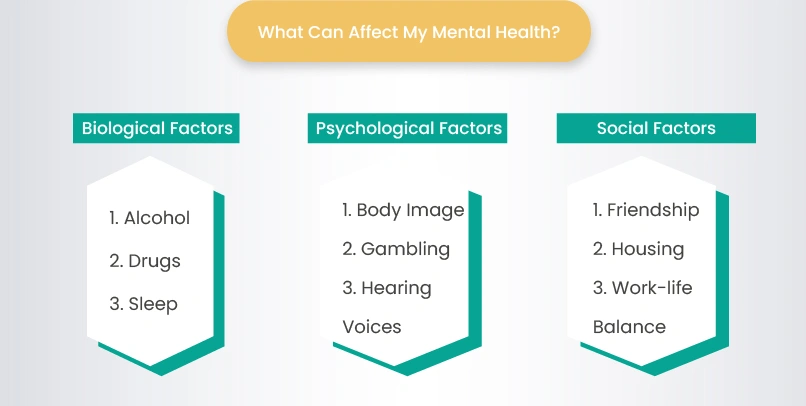
Biological Factors
Alcohol: Alcohol acts like a depressant. It lowers brain activity and alters its chemistry, providing temporary calm. That’s why people drink to seek relaxation. But as it wore off, those feelings, discomfort, etc., started again. This causes excess and dependence, which lowers brain neurotransmitter levels. This leads to several neurological and psychiatric disorders.
Drugs: Drugs can be a short-term solution, but in the long run, they damage the brain. For example, the regular or excessive use of cannabis increases anxiety levels and makes mental conditions more severe and worsen. And for the sake of temporary relief, patients can become addicted to them, which gradually turns into a chronic brain disease.
Sleep: Sleep disturbance can cause several mental conditions. Poor sleep or frequent difficulty falling asleep may indicate insomnia. Insomnia is also a main reason that causes chronic sleep disorders and other mental illnesses like depression.
Psychological Factors
Body Image: Body image refers to how we see our body, or how satisfied we are with our body shape. Aiming for unrealistic perfection, the ratio of mental disorders increases.Mental Health Foundation research shows that in the United Kingdom, only 21% of adults say they are satisfied with their bodies. While 34% felts low self-esteem, and the 20% are completely dissatisfied with their bodies and feel guilty.
Gambling: People gamble to win instant cash and spend more and more money on it. This built a mountain of debt, resulting in major financial loss. Continuous losses, family pressure, and loans cause people to feel mentally stressed.
Hearing Voices: 1 in every 10 people has experienced “auditory hallucination”. There is a high chance that people who frequently hear voices have a mental health disorder, but not everyone does. There might be several reasons behind it, like sleep disturbance, hunger, and past traumatic life experiences.
Social Factors
Friendship: While a good friendship improves your mental well-being. But, at the same time, toxic friendship, like criticism, zero support, can lead to several mental disorders.
Housing: It might feel confusing that housing issues like unaffordability and homelessness are resulting in mental disorders. People who want a stable and safe living under a roof are going through severe psychological problems.
Work-life Balance: If you are working hard, late till nights to take care of your ill parent or work in a toxic environment, it can make you mentally sick. Maintaining a healthy work-life balance is crucial to staying mentally fit.
How to Take Care of Your Mental Health? Self-Care Practices
Good mental health is a blessing, and taking care of it is crucial. Below are some of the result-driven, self-care practices for mental health that help you think, stay, and act positively:
Talk to Other People
Connecting to people and talking to them can be a great move towards your mental well-being. Here’s how to reduce stress:
- Eat and have some entertainment with your family
- Seek online support to share stories and personal experiences
- Spend some time and go on an outing with your friends
Make Yourself Physically Active
Your physical and psychological health work in parallel. Keeping your body physically fit releases feel-good neurotransmitters that boost your mood and positively impact your overall mental well-being.
- Engage yourself in physical activities like playing hide and seek
- Do at least a 30-minute morning walk and exercise
- Set daily manageable tasks for yourself, and try to complete them
Learn New Skills
Learning a new skill, like anything, keeps you engaged and, over time, builds interest. This shifts your mind and keeps it busy in learning and exploring new things daily, for example, like how to do this, etc.
- Read or watch cooking recipes online to cook something new and special
- Learn skills such as knocking, first aid and communication.
- Watch tutorials on self-assessment and parenting skills
Give Help to Others
Helping others is an act of kindness. This builds positive perceptions of you and makes you feel more self-confident. Here’s how you can help others:
- Say a little word “thank you” for every help
- Offer help in school projects or office works
- Offer care in difficult times
Keep Yourself Present in Every Situation
Mindfulness, like feeling or nothing, everything around you, not only keeps you updated, but also helps your mind stay fresh. Here’s what you can do:
- Go for a walk and notice what’s around you, e.g., trees, flowers, birds, etc.
- See the world around you, what other people do, act, and their daily life schedules
- Monitor yourself daily by performing several tasks
Be Kind to Yourself
It’s OK to feel bad sometimes, but don’t stick with it. Try to keep yourself busy, think positively and always stay happy. It doesn’t matter what you’re feeling at that time. Skip those bad feelings and move forward. Don’t get upset trying to follow these mental health care tips:
- Don’t judge yourself and lower your self-esteem
- Try to manage your emotions because you can
Understand the Different Mental Health Levels of Care
Treatment of psychiatric mental conditions doesn’t always mean the best, most effective treatment method for the patient based on their profile. “Level or care” also matters.
Many people find it new, right? But it’s the most vital part of mental health diagnosis and treatment. Mental health levels or care is the continuous structure of a treatment facility or intensity.
In simple terms, it means which environment is best for treating the patient. It ranges from weekly therapy to 24/7 specialist supervision in a fully hospitalized environment. Based on several factors, psychiatrists decided it, including symptoms’ severity, patient insurance, daily functioning, etc.
However, a mental health facility has 5 major levels. We will go from lower to higher intensity, creating a continuum. These levels are:
Outpatient Mental Health
It is a standard treatment facility, designed for those who are more stable and have a lower symptom intensity. It might be a full recovery or just a beginning; the patient doesn’t need any supervision. Weekly therapy or psychiatric care is enough (or may be more or less) from a psychiatrist/psychiatric nurse practitioner for medication management.
Intensive Outpatient Program (IOP)
IOP comes at stage 2. It is the level of care designed for patients with slightly more intense yet manageable symptoms than those requiring outpatient health care. The Intensive Outpatient Program is 4 to 12 weeks long and requires 3 to 5 days per week of 3 to 4 hours of group sessions per day. It is a non-residential program, often part-time. This allows the patient to engage in their daily life schedules alongside ongoing treatment.
Partial Hospitalization Program (PHP)
PHP is a mid-level mental health care program. Like IOP, it can include both individual and group therapy. However, it is a somewhat longer treatment process, in which patients must follow a structured schedule of 5 to 7 days per week and 4 to 6 hours per day of sessions. In the Partial Hospitalization Program, medication is also prescribed and monitored for effectiveness.
Residential Treatment
Residential treatment is also a level of care for mental health. It is a full, strict hospital-environment, residential mental healthcare treatment program. Also, it includes 24/7 supervision by a psychiatrist and medical staff. This live-in hospitalization treatment process focuses on long-term recovery and building coping skills. That’s why the treatment duration can vary based on the patient’s mental health conditions.
Inpatient Hospitalization
This mental health level of care program is designed for patients with severe mental health disorders and requires acute care mental health. In this, the patient is officially admitted to the hospital in a strictly professional environment to ensure patient safety and health. Because patients with acute psychiatric and serious mental illnesses can harm themselves. And during the inpatient hospitalization process, the patient must stay at atleast one overnight in the hospital. And the treatment can go from a few days to weeks or months.
Based on the patient’s condition, the level of care is determined. However, it doesn’t mean going against the patient’s desires, seeing improvement, psychiatrists shift levels, such as from Impatient to Partial Hospitalization Program (PHP).
A List of 10 Common Mental Health Care Frustrations
We, as patients, whenever we step towards our mental health, expect an effortless process and instant effectiveness. But throughout the process, many patients face setbacks, which is common.
Throughout this journey, you may feel frustrated, sometimes almost broken and sometimes hopeless. But remember, you are not alone! However, for seamless and personalized psychiatric services, you can trust Emotiva Healthcare.
Here is a list of the top 10 common mental healthcare frustrations most patients face:
- Long wait times
- Lack of experienced professionals or mental health care providers
- Geographic barriers
- Expenses treatment, including medication
- Rejection of insurance
- Social stigma & judgment
- Misunderstanding of mental illness
- Unavailability of assessment and screening
- Late diagnoses
- Poor care
What Should I Do if I Have A Mental Health Disorder?
The self-care pratices we have just discussed can improve your mental health concerns. However, it’s always recommended that you first consult with a psychiatrist to understand the patient’s past medical history and mental state before following these practices. Mental health treatments are followed based on the severity of the disorder after a mental health assessment.
How EHC Can Help You?
Emotive Healthcare, a trusted provider of psychiatric services and counseling in California, helps thousands of patients improve or fully recover their mental well-being. Our certified psychiatrists and Psychiatric-Mental Health Nurse Practitioners offer personalized treatment and care, standing shoulder to shoulder with you on your journey. With advanced treatment methods and proven strategies, we will help you live a life with a healthy mind and a happy mood.
We offer treatment of all mental health conditions, including anxiety, depression, OCD, ADHD, and more. You can also explore our mental health services. Moreover, you can schedule an appointment or get telehealth services to connect with your health partners 24/7.
Conclusion!
Mental health is your brain’s potential to think, understand, act, and behave. It controls your thoughts and emotions and is closely connected with your physical health. With the self-care practices discussed above, you can improve your mental health. However, if you are facing severe mental conditions or even noticing small changes, immediately contact a specialized psychiatrist.
If you have any questions or need an expert’s guidance, get in touch with us. We will wait to hear from you!